
How and When to Flush a Water Heater (Complete Homeowner Guide)
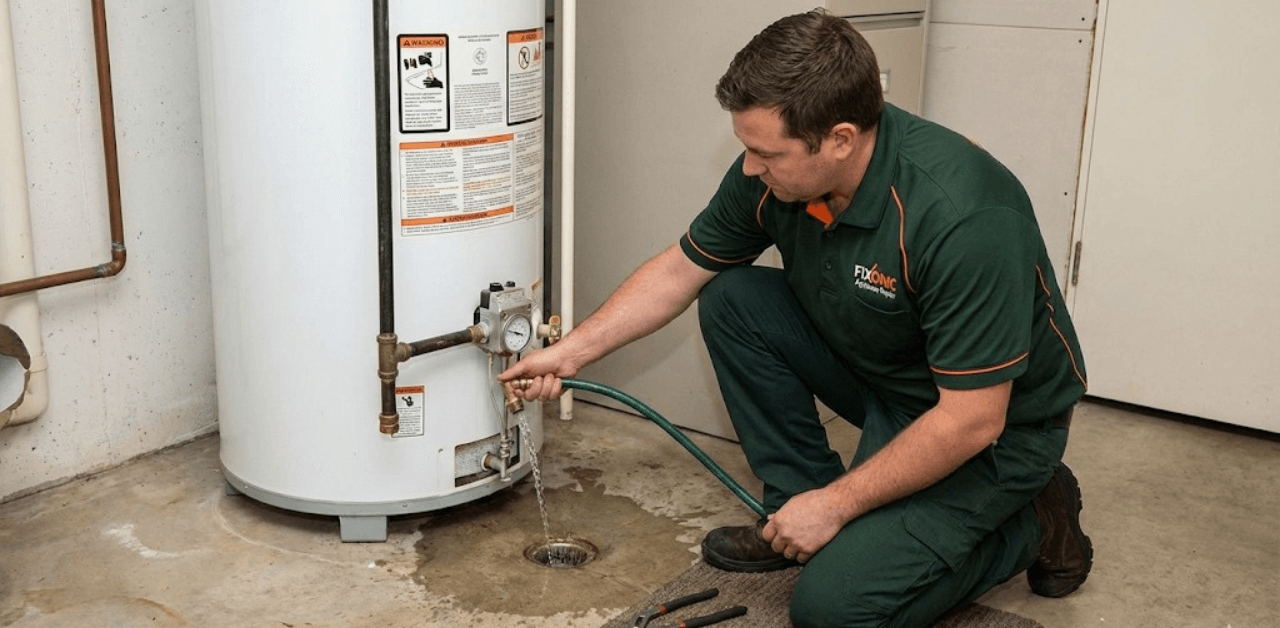
Most homeowners don’t think about their water heater until something goes wrong.
Cold showers. Loud popping sounds. Water that smells off. Higher energy bills that make no sense.
Written by a water heater technician with real-world experience
Flushing a water heater means draining water from the tank to remove sediment buildup that collects at the bottom. This buildup reduces efficiency, causes noise, and shortens the system’s lifespan. Regular flushing helps restore performance and prevent long-term damage.
I’ve seen this play out hundreds of times. In homes near older neighborhoods, newer developments, and places with hard water that quietly eats away at systems year after year.
Flushing a water heater isn’t glamorous. But it’s one of the few maintenance steps that actually changes how long the system lasts.
This guide explains what flushing really means, when it matters, how to do it safely, and when it’s smarter to call a professional. No scare tactics. No filler.
Table of Contents
What Does Flushing a Water Heater Mean?
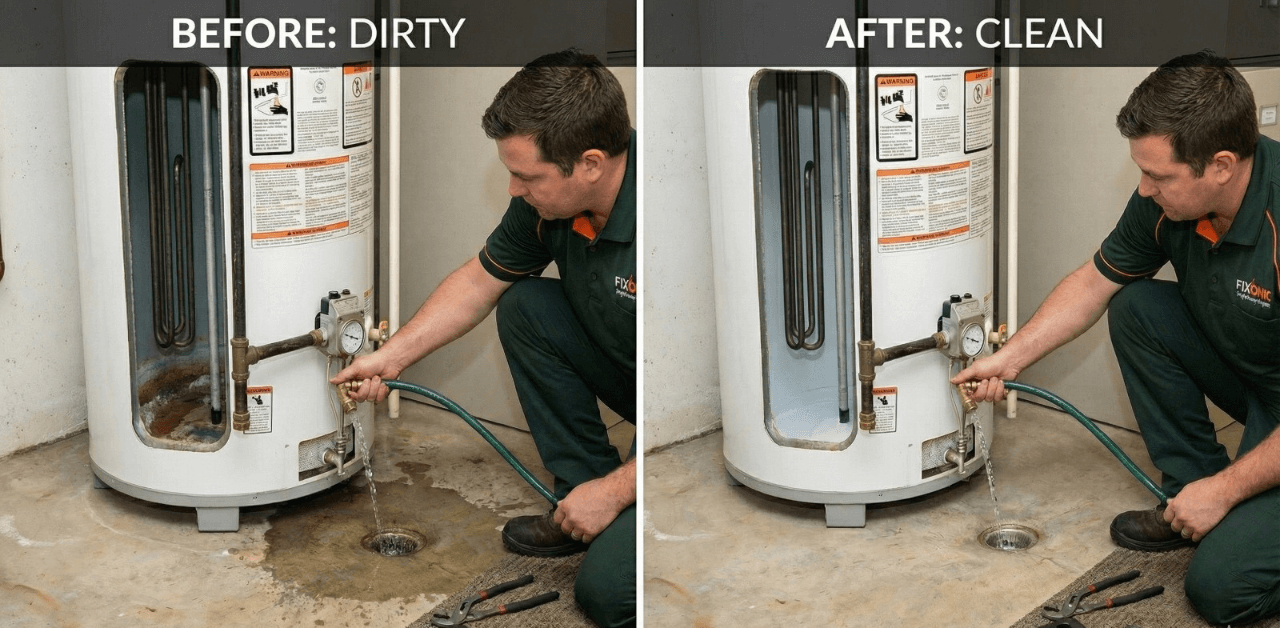
Flushing a water heater means draining water from the tank to remove buildup that settles at the bottom over time.
That buildup usually includes:
- Sediment from minerals in the water
- Small debris from the supply line
- Particles that harden when exposed to heat
As water heats, minerals drop out and sink. Over months and years, they form a thick layer. That layer traps heat, stresses the system, and changes how the heater works.
Flushing clears that layer out.
It resets the inside of the tank.
This is what people are usually asking when they search:
“What is water heater flushing?”
Why Flushing a Water Heater Is Important
Skipping flushing doesn’t cause instant failure.
It causes slow damage that shows up later.
Here’s what sediment does over time.
- Heating problems
Heat gets trapped under buildup. The heater works harder to do the same job. - Noise issues
Popping or rumbling sounds come from water boiling under sediment. - Smelly or discolored water
Trapped material can affect smell and appearance. - Reduced hot water
Sediment takes up space meant for heated water. - Long-term damage
Extra stress shortens the life of internal parts.
I’ve seen tanks fail years earlier than expected because flushing never happened. The owners didn’t do anything wrong. No one explained it to them.
When Should You Flush a Water Heater?
How Often a Water Heater Should Be Flushed
For most homes, once per year works well.
In areas with hard water, flushing every six to nine months helps. This includes many parts of the Midwest, Southwest, and older metro areas where mineral content runs high.
New homes are not immune.
Fresh pipes still carry minerals.
Signs Your Water Heater Needs Flushing
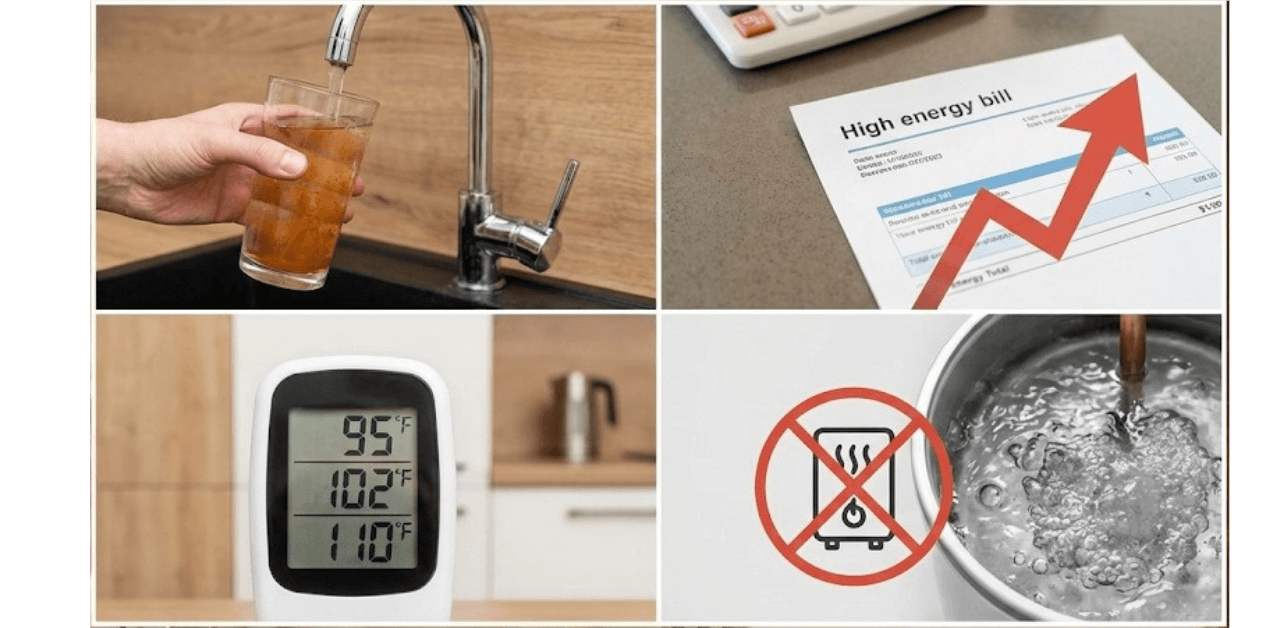
Watch for these warning signs.
- Loud banging or popping sounds
- Hot water running out faster than before
- Bad smells coming from hot water
- Rust-colored water at the faucet
- Energy bills creeping up without explanation
One sign alone doesn’t confirm sediment. Several together usually do.
Can You Flush an Old Water Heater?
This is where most guides get it wrong.
Yes, you can flush an older unit.
But you need to be careful.
Risks include:
- Drain valves that no longer seal
- Weak tank walls exposed after sediment removal
- Leaks that were hidden by buildup
If a unit is over ten years old and has never been flushed, forcing it can cause problems.
In those cases, a professional inspection often makes more sense than a DIY flush.
Is It Safe to Flush a Water Heater Yourself?
Short answer: sometimes.
DIY flushing is usually safe when:
- The system is under ten years old
- There are no active leaks
- The drain valve turns freely
- You follow pressure-release steps
It’s not recommended when:
- The unit is very old
- You notice corrosion around valves
- Water pressure behaves oddly
- You’re unsure about gas or power shutoff
Gas and electric systems differ.
Pressure matters more than most people realize.
This is why many homeowners search:
“Is flushing a water heater dangerous?”
The danger comes from rushing or skipping steps.
Tools and Materials Needed to Flush a Water Heater
You need:
- A standard garden hose
- A bucket
- Access to a safe drain area
- Basic safety awareness
No special tools required.
Step-by-Step Guide: How to Flush a Water Heater Safely
Step 1 – Turn Off Power or Gas
Electric systems must be powered down at the breaker.
Gas systems should be set to pilot or off.
This prevents heating an empty tank, which causes damage.
Step 2 – Shut Off the Cold Water Supply
This stops new water from entering the tank.
The supply valve is usually above the unit.
Step 3 – Attach a Garden Hose to the Drain Valve
Connect the hose securely.
Run it to a floor drain or outdoor area away from plants.
Hot water and sediment can damage landscaping.
Step 4 – Open a Hot Faucet to Release Pressure
This step gets skipped a lot.
Opening a hot faucet allows air in.
That prevents vacuum pressure and helps the tank drain smoothly.
Step 5 – Open the Drain Valve and Empty the Tank
Water will flow through the hose.
At first, it may look cloudy or dirty.
That’s sediment leaving the system.
Step 6 – Flush Out Sediment From the Tank
Turn the cold water on briefly while the drain stays open.
This stirs remaining buildup and pushes it out.
When the water runs clear, most sediment is gone.
Step 7 – Close the Drain Valve and Refill the Tank
Shut the drain valve fully.
Remove the hose.
Turn the cold supply back on and let the tank refill.
Step 8 – Restore Power or Gas Safely
Wait until the tank is full.
Then restore power or gas.
Heating an empty tank causes serious damage.
After Flushing — What to Check Before Walking Away
This part matters.
Check for:
- Leaks around the drain valve
- Normal heating time
- Clear water at faucets
- Any unusual smells
Many issues show up in the first hour.
Catching them early saves money.
Common Problems After Flushing a Water Heater
Water Heater Not Heating After Flush
This usually means power or gas was restored too early or not fully reset.
Leaking Drain Valve
Older valves may not reseal.
Sometimes tightening helps.
Sometimes the valve needs replacement.
Air in the System
Sputtering faucets are common after refilling.
Run hot water for a few minutes to clear air.
Bad Smell After Flushing
This often clears within a day.
If it doesn’t, deeper buildup or internal parts may need attention.
How Flushing Helps Extend the Life of Your Water Heater
Regular flushing:
- Reduces stress on heating components
- Improves efficiency
- Prevents surprise breakdowns
I’ve seen systems last several years longer with basic maintenance alone.
That’s not marketing.
That’s pattern recognition.
Should a Professional Flush Your Water Heater?
When Hiring a Pro Makes Sense
- Older systems
- Heavy buildup
- Safety concerns
- Previous leaks
This is common in older homes and high-use households.
What a Professional Does Differently
A professional flush includes:
- Deeper sediment removal
- Valve inspection
- Pressure and safety checks
It’s not just draining water.
It’s checking the whole setup.
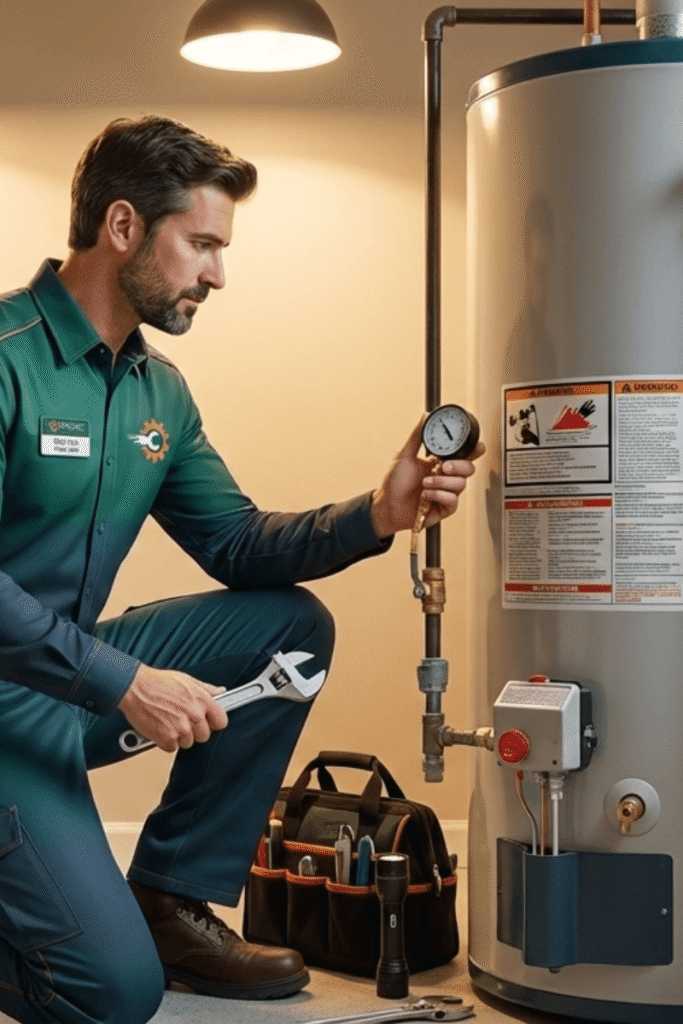
Water Heater Maintenance Tips to Prevent Buildup
Simple habits help.
- Flush once per year
- Keep temperature at safe levels
- Watch for early warning signs
Maintenance is cheaper than replacement. Always.
Water Heater Maintenance Services by Water Heater USA
Water Heater USA provides maintenance services designed for real homes, not sales scripts.
Plans focus on:
- Preventing failures
- Improving performance
- Catching problems early
Service is available nationwide, with technicians familiar with regional water conditions, seasonal demand, and local building standards.
No pressure.
Just clear options.