Breaker Keeps Tripping? 7 Steps to Fix Your Washing Machine
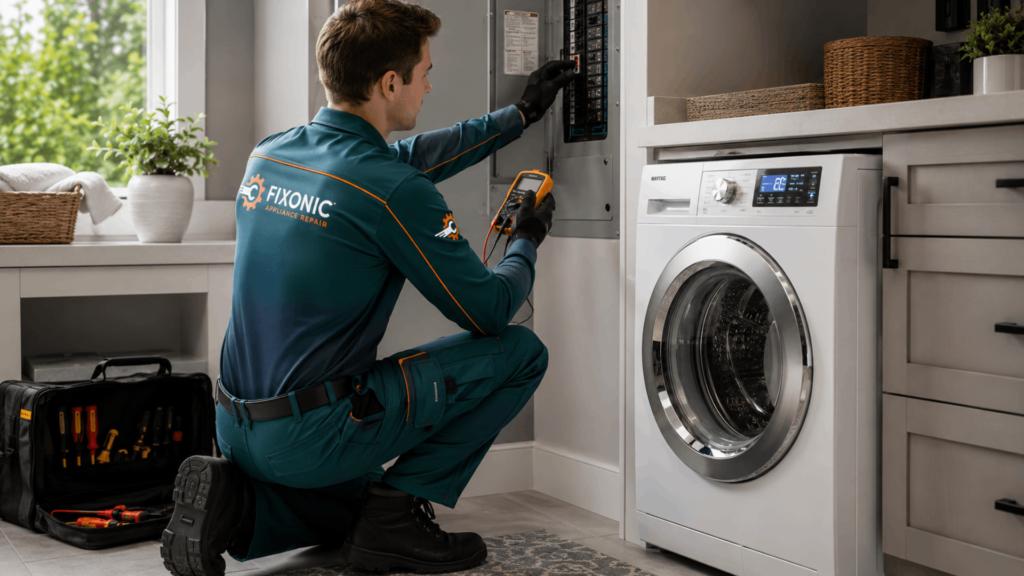
You load the washer, start a cycle, and a few minutes later the power shuts off. You check the electrical panel and find a tripped circuit breaker.
This is a common problem, but it should never be ignored.
A circuit breaker is designed to protect your home from electrical damage. When it trips, it means the breaker has detected a problem such as a short circuit, ground fault, overloaded circuit, damaged wiring, or a faulty appliance component.
The good news is that the timing of the breaker trip often points directly to the cause.
This guide explains the most common reasons a washing machine trips a breaker and the steps you can take to find the problem safely.
Why Does a Washing Machine Trip a Breaker?
A washing machine usually trips a circuit breaker because of a faulty drain pump, worn motor, damaged wiring, water leak, heating element problem, circuit overload, or a failing circuit breaker.
Pay attention to when the breaker trips during the wash cycle. That information can help narrow down the source of the electrical problem.
Step 1: Find Out When the Breaker Trips
The point where the breaker trips is often the biggest clue.
It Trips Immediately
If the machine begins filling with water before the breaker trips, moisture may be involved.
Possible causes include:
- Water leak
- Wet electrical components
- Ground fault
- Damaged insulation
Water and electricity do not mix. Even a small leak can create electrical trouble inside the washer.
It Trips During Filling
If the breaker trips as soon as you press Start, look for:
- Damaged power cord
- Short circuit
- Faulty start switch
- Damaged internal wiring
A short circuit occurs when electrical current follows an unintended path. This causes a sudden surge that forces the breaker to shut off power.
It Trips During Draining
A breaker that trips during the drain cycle often points to a faulty drain pump.
Watch for:
- Water remaining inside the drum
- Unusual noises
- Water leaking underneath the machine
- Breaker trips every time the washer drains
It Trips During Spinning
The washer motor works hardest during the spin cycle.
Common causes include:
- Worn motor
- Bad motor capacitor
- Overheating motor
- Excessive electrical load
If the drum struggles to spin or you hear a loud humming noise, the motor may be failing.
It Trips During Hot Wash Cycles
Some washers use a heating element to warm water.
If the breaker only trips during hot cycles, the heating element may be leaking electricity and creating a ground fault.
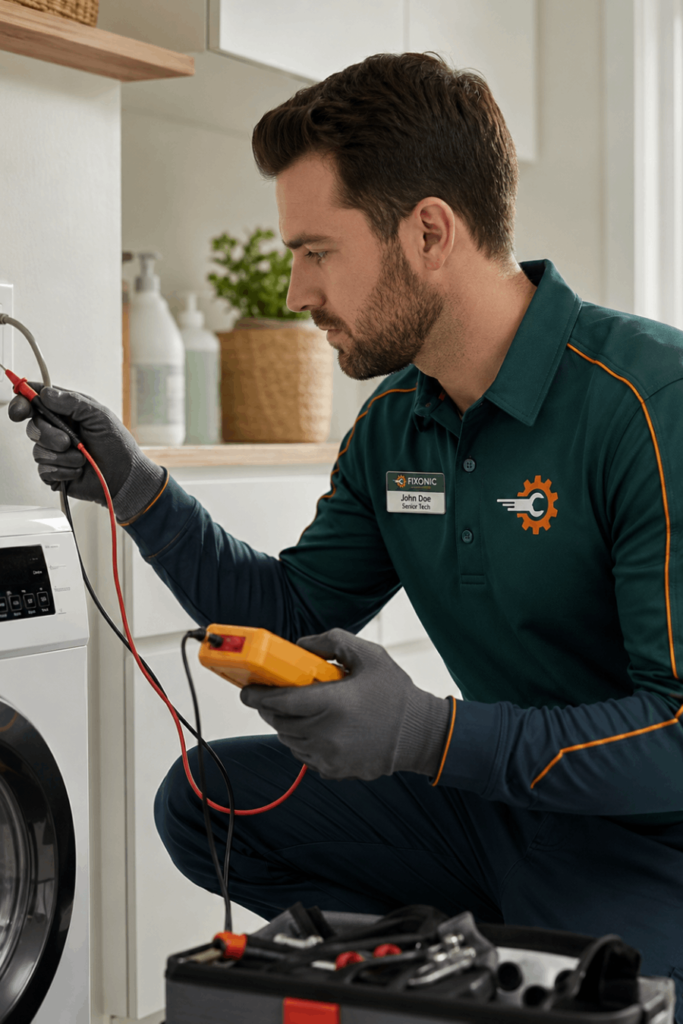
Step 2: Check the Power Cord and Outlet
Before inspecting internal components, check the simplest items first.
Examine the power cord carefully.
Look for:
- Frayed wires
- Cuts in the insulation
- Burn marks
- Melted plastic
- Loose plug connections
A damaged power cord can create a short circuit or cause excessive heat buildup.
Next, test the wall outlet.
Plug a small appliance or lamp into the same outlet. If the outlet fails to provide consistent power, the problem may be outside the washer.
Avoid using extension cords with washing machines. They are not designed to handle the appliance’s power consumption and can become a fire risk.
Step 3: Look for Water Leaks
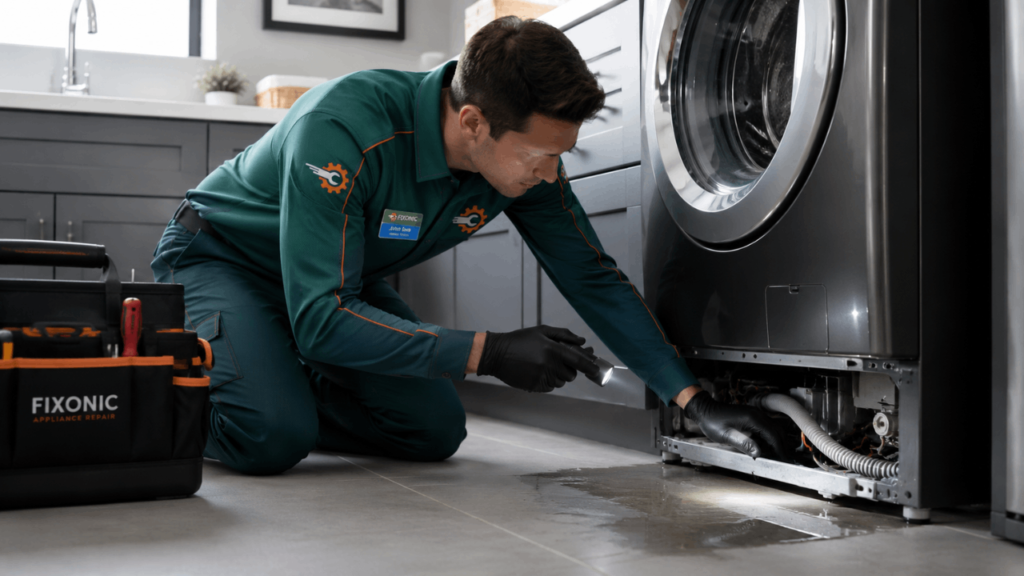
Many homeowners focus only on electrical parts and miss the actual cause.
Water leaks are one of the most common reasons a washer trips a breaker.
Inspect:
- Water supply hoses
- Drain hose
- Door gasket
- Drain pump area
- Bottom of the cabinet
Look for moisture around electrical wires, connectors, switches, and other electrical components.
A leak can allow electricity to escape from its normal path and trigger a ground fault.
Even a slow drip can cause problems over time.
Step 4: Inspect the Drain Pump
The drain pump removes water from the washer during the drain cycle.
If the pump motor develops an internal short circuit or begins leaking, it can trip the breaker.
Signs of a faulty drain pump include:
- Breaker trips during draining
- Water won’t drain properly
- Grinding noises
- Water leaks under the washer
- Burning smell near the pump area
A damaged drain pump should be replaced as soon as possible to prevent further damage.
Step 5: Check the Washer Motor
A failing washer motor is another common cause of breaker trips.
The motor draws significant power during operation, especially during the spin cycle.
Watch for these symptoms:
- Breaker trips during spinning
- Burning odor
- Humming sounds
- Drum turns slowly
- Washer struggles to complete cycles
Motor problems often worsen over time. What starts as an occasional breaker trip can eventually leave the washer unable to operate at all.
In many cases, a technician can determine whether the motor, motor capacitor, or another electrical component is responsible.
Step 6: Look for Damaged Wiring
Damaged wiring creates serious electrical safety risks.
Unplug the washing machine before performing any inspection.
Check for:
- Burned wires
- Melted insulation
- Loose connectors
- Scorch marks
- Corroded terminals
- Pinched wire harnesses
Damaged wiring can create short circuits, ground faults, and overheating.
If you discover damaged wires, stop troubleshooting and contact a qualified appliance repair technician.
Electrical repairs performed incorrectly can increase the risk of fire and electrical shock.
Step 7: Rule Out a Bad Circuit Breaker
Sometimes the washing machine is not the problem.
Circuit breakers wear out over time. Internal contacts can weaken and cause nuisance trips even when the appliance is operating normally.
Signs of a failing breaker include:
- Breaker trips too easily
- Breaker feels hot
- Buzzing or crackling sounds
- Breaker won’t reset properly
- Visible damage inside the electrical panel
An electrician can test the breaker and determine whether replacement is necessary.
When to Call a Professional
Some problems require professional diagnosis.
Contact an appliance repair technician if:
- The breaker keeps tripping after troubleshooting
- You smell burning
- You see sparks
- Water has reached electrical parts
- The breaker refuses to reset
- You find damaged wiring
These situations can create fire hazards and electrical shock risks if ignored.
How to Prevent Future Breaker Trips
A few simple maintenance habits can reduce the risk of future electrical problems.
- Avoid overloading the circuit
- Use a dedicated washer outlet when possible
- Repair leaks immediately
- Inspect power cords regularly
- Keep electrical parts dry
- Schedule routine appliance maintenance
- Replace worn components before they fail
Preventative maintenance is often less expensive than major repairs caused by electrical damage.
Why does my washing machine trip the breaker during the spin cycle?
The washer motor works hardest during spinning. A failing motor, bad motor capacitor, or excessive electrical load can cause the breaker to trip at this stage.
Can a bad circuit breaker cause this problem?
Yes. Circuit breakers can wear out over time. A faulty breaker may trip even when the washing machine is operating normally.
Is it safe to keep resetting the breaker?
No. Repeatedly resetting a breaker without finding the cause can damage electrical components and increase the risk of overheating or fire.
Can a water leak trip a breaker?
Yes. Water can reach electrical parts and create a ground fault. This causes the breaker to trip as a safety measure.
Should a washing machine be on its own circuit?
Yes. A dedicated circuit reduces the chance of overloads and helps the washer receive a stable power supply.
Final Thoughts
A breaker that keeps tripping is a warning sign that should never be ignored.
The cause could be something simple, such as a circuit overload, or something more serious, like damaged wiring, a faulty motor, or a water leak reaching electrical components.
Start by identifying when the breaker trips. Then inspect the power cord, outlet, drain pump, motor, and wiring. If the problem continues or you notice signs of electrical damage, stop using the washer and seek professional help.
Finding the cause early can prevent costly repairs, protect your appliance, and keep your home safe.