
Watt's Too Much? How Many Appliances Can You Safely Plug Into One Outlet
Ever had your breaker trip or noticed your outlet getting warm when multiple devices are plugged in? If so, you’re not alone. Many homeowners in Abilene, TX, unknowingly overload their circuits, risking fires, damaged appliances, and tripped breakers. Understanding outlet capacity, wattage, and load isn’t just technical knowledge it’s essential for home safety.
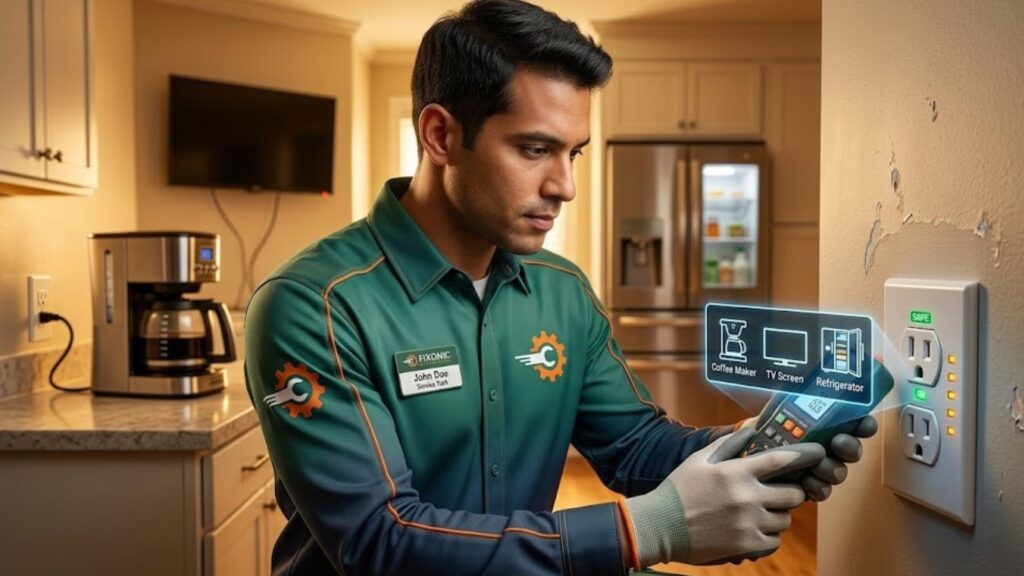
In this guide, we’ll explore how many appliances you can safely plug into a single outlet, the importance of surge protectors, practical safety tips, and real-life examples from my experience servicing homes across Abilene. By the end, you’ll know how to protect your home, your devices, and your family.
How Much Power Can an Outlet Handle?
A standard U.S. outlet is rated for either 15 amps or 20 amps, supplying 120 volts of electricity. To determine its power capacity, use the simple formula:
Amps × Volts = Watts
For example:
- A 15-amp outlet: 15 × 120 = 1800 watts
- A 20-amp outlet: 20 × 120 = 2400 watts
However, you shouldn’t max out your outlet. That’s where the 80% continuous load rule comes in, which ensures safe, long-term operation of your electrical system.
The 80% Continuous Load Rule
The National Electrical Code (NEC) advises that only 80% of an outlet’s rated amperage should be used continuously. For a 15-amp outlet, this means 12 amps, or about 1440 watts.
Exceeding this limit increases the risk of overheating, tripping breakers, and even fires. Many competitors mention outlet capacity but fail to explain the difference between continuous and peak load. Continuous load refers to devices running for hours, like washers or refrigerators, while peak load might include brief spikes, such as starting a coffee maker.

How Many Watts Can a Wall Outlet Handle?
Let’s apply this to everyday appliances:
Appliance | Wattage |
Refrigerator | 600–800 W |
Coffee Maker | 900–1200 W |
Air Conditioner | 1200–1800 W |
TV | 100–400 W |
Laptop | 60–100 W |
If you plug a refrigerator (700 W), coffee maker (1000 W), and TV (300 W) into a 15-amp outlet, you exceed the 1440-watt safe limit, potentially overloading the circuit. Competitors often miss these practical, real-world examples, but they are crucial for homeowners.
Is an Overloaded Outlet Dangerous?
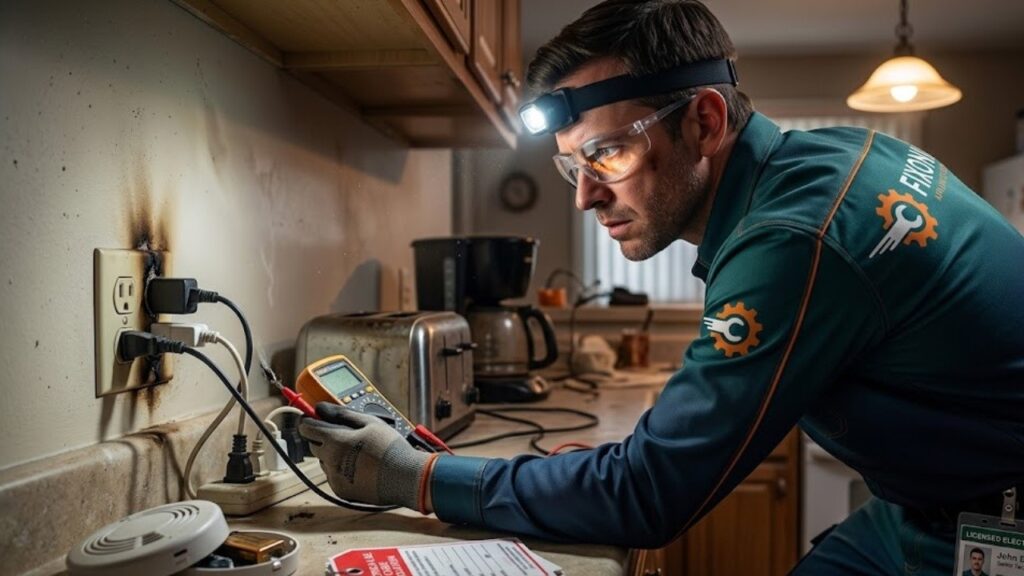
Overloaded outlets can cause serious problems:
- Fire hazards due to melted wires or scorched outlets
- Damaged appliances from voltage fluctuations
- Tripped breakers, disrupting your home’s electricity
Signs your outlet may be overloaded include:
- Flickering lights
- Warm or discolored plugs
- Scorch marks near the outlet
- Frequent breaker trips
From my experience repairing homes in Abilene, I’ve seen outlets fail because multiple high-wattage appliances ran simultaneously without surge protection. Always prioritize safety and licensed electricians for high-load circuits.
How Do I Know How Many Things I Can Plug Into One Outlet?
Step one: check the amp rating on each appliance’s label.
Step two: calculate the total wattage for all devices on the outlet.
Example:
- Microwave: 1200 W
- Blender: 600 W
- Lamp: 60 W
Total = 1860 W → exceeds a 15-amp outlet’s 1440 W safe limit
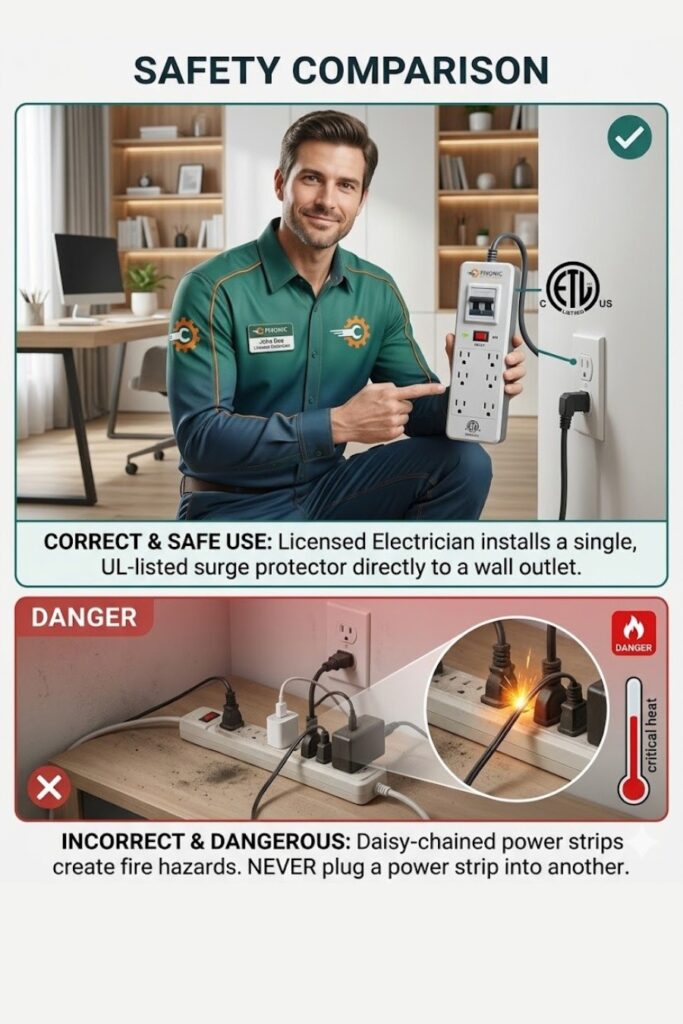
Avoid daisy-chaining multiple power strips. Competitors often omit guidance for unusual appliances like deep fryers, space heaters, or high-power coffee machines, which can easily overload an outlet.
Surge Protectors and Power Strips
How Many Things Can I Plug Into a Power Strip?
A standard power strip can safely handle multiple devices if it doesn’t exceed the strip’s rating. Features to look for:
- Built-in fuses
- Indicator lights
- Overcurrent protection
Avoid cheap strips they often lack proper surge protection. Certified strips prevent damage to sensitive electronics during power spikes.
Can I Plug Two Power Strips or Surge Protectors Into One Outlet?
Daisy-chaining power strips is unsafe. It dramatically increases fire risk and can overload the circuit. Better alternatives:
- Add another outlet
- Install a higher-rated circuit for high-wattage areas
Competitors rarely give practical solutions for homes with limited outlets, which is crucial for homeowners in older Abilene neighborhoods.
Additional Electrical Safety Tips
Can Every Outlet on a Branch Circuit Carry 15 or 20 Amps?
Not necessarily. Each branch circuit has a total capacity, shared among all outlets. Never assume every outlet can handle the maximum amperage individually.
Can You Plug a Surge Protector Into an Extension Cord?
Generally unsafe. Use heavy-duty, properly rated extension cords if necessary. Always read the manufacturer instructions.
What Happens If I Draw 15 or 20 Amps Continuously From an Outlet?
Continuous high-current draw leads to:
- Overheated wires
- Tripped breakers
- Fire hazards
Remember: continuous load is more dangerous than short-term spikes.
Practical Tips for Home Appliance Safety
- Unplug high-wattage appliances when not in use
- Use surge-protected outlets for sensitive electronics
- Inspect cords for fraying, discoloration, or melted casings
Want to Add More Outlets to Your Home?
High-load areas like kitchens and laundry rooms may need additional circuits. Hire a licensed electrician to:
- Install dedicated outlets
- Balance load across multiple circuits
- Upgrade wiring for safety
Competitors rarely provide step-by-step planning guidance, which is vital for safe home upgrades in Abilene.
How many devices can I safely plug into one outlet?
Check filters, clean ducts, and call a licensed HVAC technician for persistent odors.
Is it safe to use multiple power strips on a single outlet?
Yes, turn off the system immediately if you detect gas or burning smells.
What are the signs my outlet is overloaded?
Startup odors can result from accumulated dust, moisture, or refrigerant leaks in the coils.
Can I plug high-wattage appliances like a toaster and microwave into the same outlet?
Freon leaks often smell sweet, chemical-like, or chloroform-like, sometimes mistaken for gas.
Do surge protectors prevent outlet overloads?
Yes, clogged filters trap dust, moisture, and allergens, causing musty or unpleasant odors.
Conclusion
Understanding how many appliances you can safely plug into one outlet is critical for safety, appliance longevity, and preventing fires. Always check appliance wattage, outlet rating, and circuit capacity. Use surge protectors, avoid daisy-chaining, and hire licensed electricians for upgrades.
For homeowners in Abilene, TX, taking these precautions ensures your home stays safe, efficient, and electrically sound. What’s the most surprising appliance you’ve learned can overload a single outlet?