
Why Does My AC Smell Like Gas? What Should You Do?
There’s nothing more alarming than noticing your air conditioner emitting a strange, gas-like odor. While some AC smells are normal, a gas smell can indicate a serious hazard. Detecting these issues early is crucial for your safety and your home’s comfort. In this guide, we’ll explore the causes, risks, and professional solutions to AC gas odors, drawing from real-life cases, expert insights, and practical advice.
Why Does My AC Unit Smell Like Gas?
Not all AC odors are dangerous. A faint musty smell from filters or ducts is often harmless. However, gas like smells are different they can indicate natural gas leaks, refrigerant problems, or electrical malfunctions. Detecting the source quickly can prevent health risks, fire hazards, and costly repairs. Common causes include nearby gas leaks, refrigerant leaks, ductwork issues, and HVAC system malfunctions.
1. Nearby Gas Leak
If your AC is near a gas appliance, such as a furnace or water heater, leaks can infiltrate your ducts. Natural gas itself is odorless, but mercaptan gives it a rotten egg scent for safety detection. Early signs include persistent rotten egg smells, unusual odors, and triggered alarms. Ignoring these symptoms can put you at risk of carbon monoxide exposure or fire hazards.
2. Refrigerant Leak
Refrigerant leaks are another frequent cause of AC gas-like smells. Unlike natural gas, refrigerant has a sweet, musky, or chemical like odor. Symptoms often include reduced cooling efficiency, hissing sounds, or frost on the coils. Inhaling refrigerants is unsafe, so professional attention is crucial.
3. Ductwork Issues
Leaks or gaps in your AC ductwork can distribute odors throughout your home. Poorly sealed ducts or blocked airflow may allow musty, moldy, or chemical odors to circulate. Regular duct inspections can prevent these issues and maintain indoor air quality.
4. HVAC System Malfunction
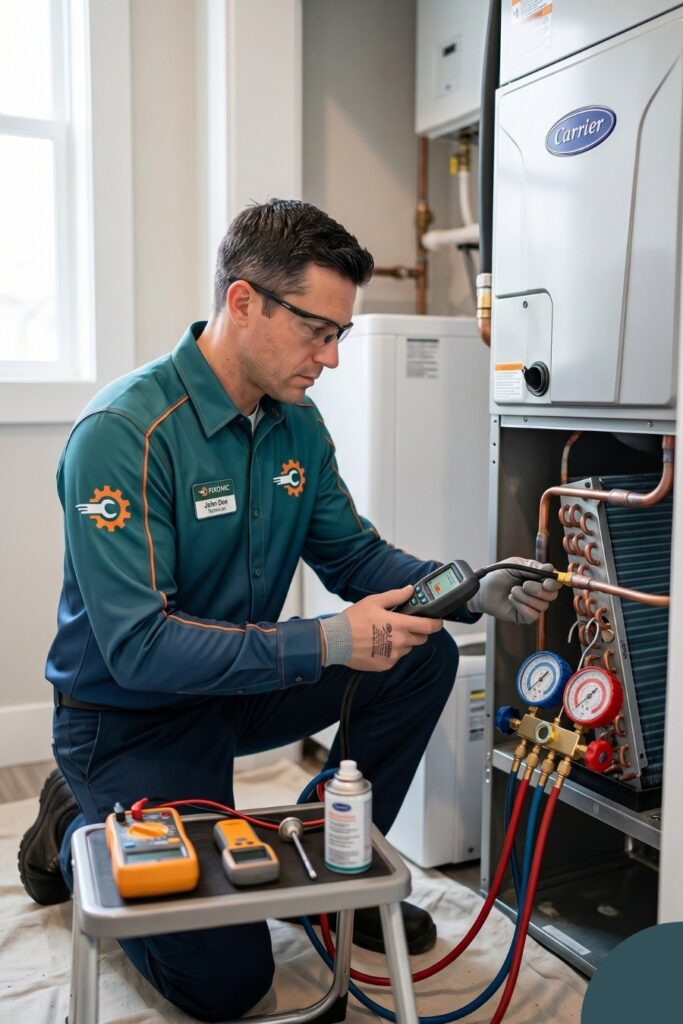
Electrical or mechanical faults in the HVAC system can produce unusual odors. Overheating motors, frayed wiring, or faulty circuit boards may create chemical, burning, or gas like smells. A professional inspection can identify these problems before they escalate.
Is It Normal To Smell Gas From An Air Conditioner?
Some odors in AC systems are typical, like dust, mildew, or minor chemical smells from cleaning agents. However, persistent gas-like odors are abnormal and warrant immediate attention. Signs of emergencies include strong sulfur or rotten egg scents, hissing noises, and visible frost on coils.
How Do I Know If My AC Gas Is Leaking?
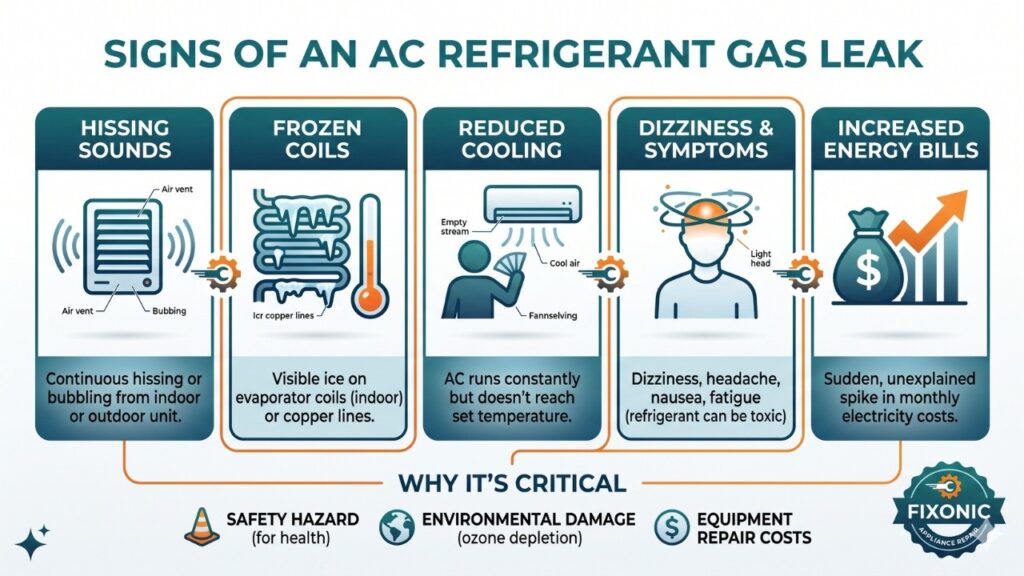
Observable signs of a gas leak include:
- Hissing sounds or bubbling noises
- Ice buildup on coils or temperature fluctuations
- Chemical-like or rotten egg odors
- Reduced cooling efficiency
- Health symptoms: dizziness, headaches, nausea
Recognizing these signs promptly can prevent accidents and ensure your HVAC system operates safely.
I Smell Gas From My AC | What Should I Do?
If you detect a gas-like odor, act immediately:
- Turn off your HVAC system at the thermostat or breaker.
- Ventilate your home by opening windows and doors.
- Evacuate if the smell is strong.
- Avoid using electronics, open flames, or sparking devices.
- Contact a licensed HVAC professional or gas utility company.
Prompt professional inspection ensures the source is correctly identified and safely resolved.

What Do Different AC Smells Mean?
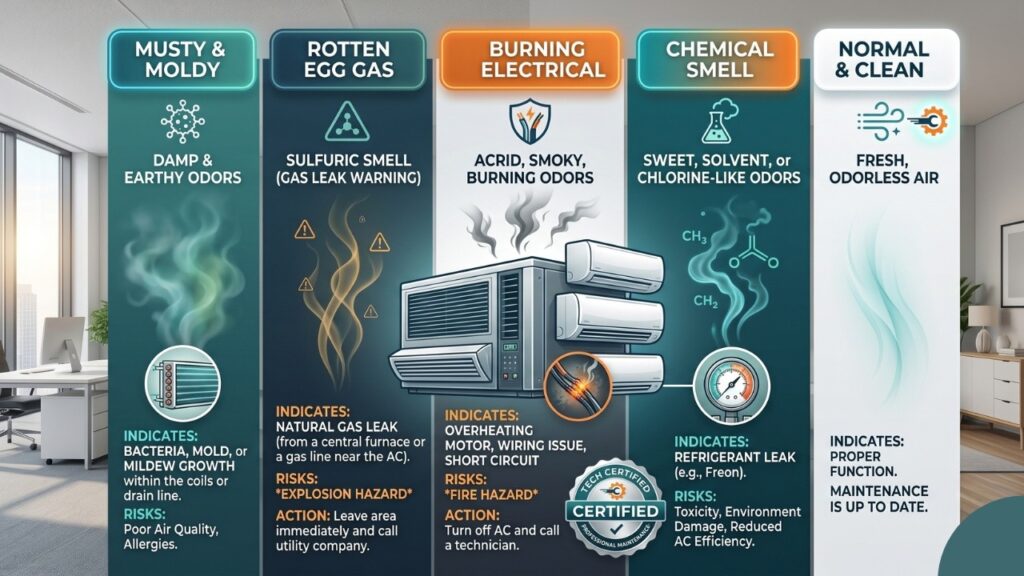
Different AC odors can indicate various issues:
- Musty or moldy: Excess moisture, clogged drains, or mold in ducts.
- Rotten eggs: Natural gas leak; immediate emergency.
- Burning or chemical: Electrical overheating or refrigerant leaks.
- Vinegar or chemicals: Refrigerant leak, acetone, or paint thinner odor.
- Urine or fish: Bacterial growth or dead animals inside the unit.
1. Why Does My AC Smell Musty or Moldy?
Moisture buildup and clogged filters create breeding grounds for mold and allergens. This affects indoor air quality and may trigger health issues like allergies or respiratory irritation.
2. Why Does My AC Smell Like Gas or Rotten Eggs?
Gas leaks, combined with mercaptan, produce a strong sulfur scent. Immediate action is essential: evacuate and call professionals to mitigate health risks.
3. Why Does My AC Smell Like It’s Burning or Has a Chemical Odor?
Overheated motors, faulty wiring, or circuit boards may emit burning smells. Refrigerant leaks may create chemical or chloroform-like odors. These are safety hazards and also reduce energy efficiency.
What Are the Main Causes of a Bad Air Conditioner Smell?
Common causes include:
- Mold, mildew, bacteria, and fungus buildup
- Refrigerant or chemical leaks
- Mechanical malfunctions and electrical issues
- Improper maintenance: clogged filters, blocked condensate drains, dirty coils
- Ductwork contamination or airflow restrictions
Regular inspections and professional cleaning can prevent these problems.
Can I Fix a Smelly AC Myself?
DIY solutions are limited to minor musty odors:
- Replace air filters and clean drain lines
- Remove debris around the unit
- Vacuum ducts if accessible
Gas, chemical, or electrical smells should never be handled by DIY methods.
How Can I Prevent My AC From Smelling in the Future?
Prevention includes:
- Routine maintenance: seasonal tune-ups and filter replacements
- Annual professional HVAC inspections
- Installing carbon monoxide detectors near HVAC systems
- Cleaning vents and maintaining proper airflow
- Hiring professionals for preventive maintenance to avoid costly repairs
When Should I Call a Professional for an AC Smell?
Call an expert if:
- Musty odor persists after cleaning
- Strong chemical or gas-like smells occur
- Electrical burning or unusual mechanical noises appear
- Refrigerant leaks or mold growth are beyond DIY repair
- You want a thorough system inspection for safety and efficiency