
Why Is My New AC So Loud Inside My House?
A new AC should make your home cooler, not louder. If you recently installed a system and now hear roaring airflow, rattling panels, buzzing, whistling vents, or vibration inside the house, something needs attention.
Some sound is normal. A new air conditioner may move more air than your old unit. It may also use a stronger blower, different fan speed, or a new thermostat setup. But loud indoor noise is not something you should ignore.
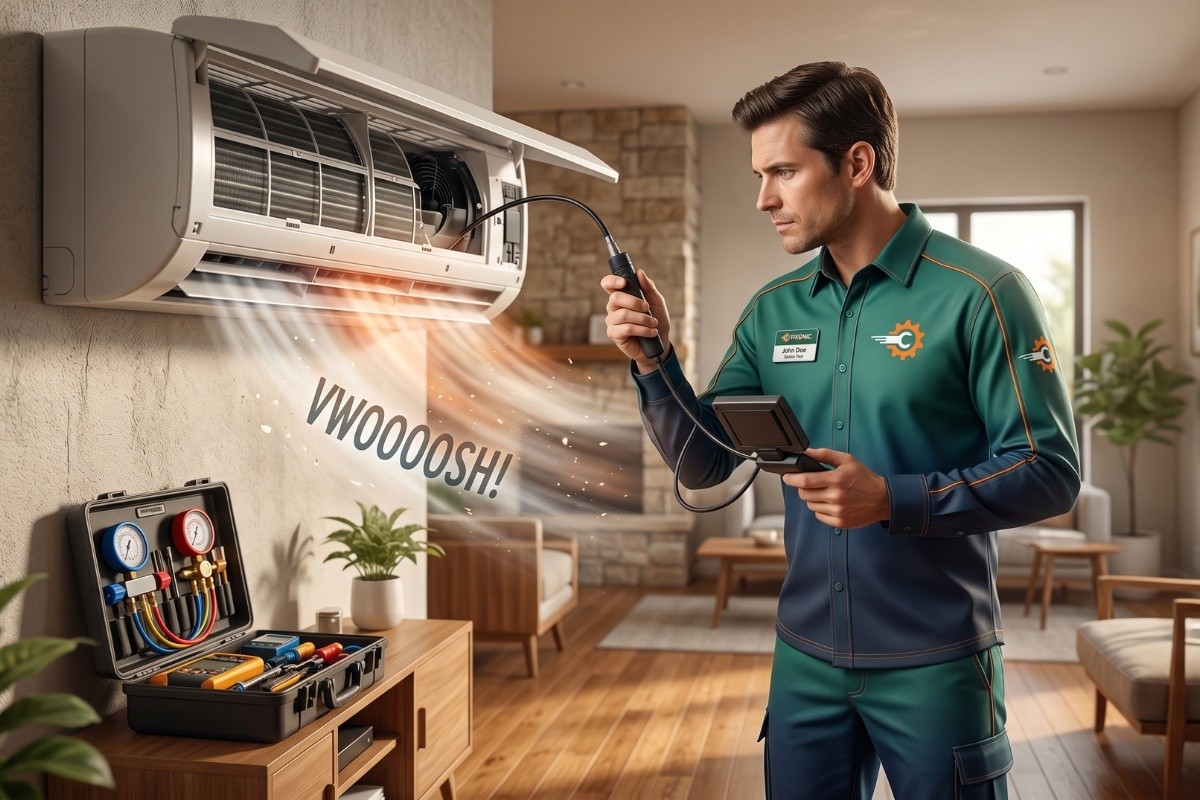
In many homes, the problem is not the AC alone. It can come from ductwork, return air pressure, blower speed, loose parts, poor installation, or the wrong size unit. That is why the question “why is my new AC so loud inside my house?” needs more than one quick answer.
For Abilene homeowners, this matters even more. Hot weather puts long hours on cooling systems. If your new AC is loud during every cycle, the noise may point to comfort, efficiency, or repair problems.
If the sound is soft airflow, monitor it. If it is buzzing, banging, grinding, hissing, or loud enough to disturb sleep, schedule an inspection.
Why Your New AC Sounds Loud Indoors
Your new AC may be loud inside your house because it moves more air, has high blower speed, uses ductwork that is too small, or was installed incorrectly. Dirty filters, blocked vents, return air noise, loose panels, vibration, and mechanical issues can also make a new system sound much louder than expected.
A new HVAC unit should sound different from an old system. That does not mean it should sound harsh. If the air sounds like a wind tunnel, the duct system may not match the new unit.
If the noise started right after installation, ask the installer to check airflow, static pressure, duct connections, blower settings, and the return air path.
ENERGY STAR recommends regular HVAC maintenance and filter checks because dirty filters can raise energy use and damage equipment over time.
Table of Contents
Is It Normal for a New AC Unit to Be Loud?
Some sound from a new AC is normal, especially during startup, shutdown, and airflow through vents. But it should not shake walls, disturb sleep, overpower conversation, or make sharp mechanical sounds. Loud noise usually means airflow, installation, ductwork, or equipment setup needs a closer look.
A new unit often has a stronger blower than the old one. It may push more air through the same old ductwork. That can make vents louder.
This is common in older homes. The homeowner replaces the AC, but the ductwork stays the same. The new system may be correct on paper, yet the duct system cannot handle the airflow quietly.
A contrarian point matters here. Many people blame the brand first. They say Carrier, Trane, Lennox, Goodman, Rheem, American Standard, or York is “too loud.” Sometimes the brand is not the issue. The real issue is sizing, duct design, installation quality, or blower setup.
Good equipment can still sound bad when installed poorly.
ACCA Manual J is the ANSI recognized standard used for residential load calculations. It helps determine proper HVAC equipment sizing.
Common Reasons Your New AC Is So Loud Inside the House
The most common causes are improper installation, wrong AC size, undersized ducts, high blower speed, dirty filters, loud return air, loose panels, vibration, fan issues, refrigerant problems, and electrical faults. The sound type often gives the first clue about where the problem starts.
Improper AC Installation
Bad installation can make a quiet unit sound loud.
Loose panels may rattle. Poor duct connections may whistle. Weak mounting can send vibration through floors and walls. A badly placed air handler can make bedrooms or hallways noisy.
A common service scenario looks like this. A homeowner installs a new system, then hears loud rushing air in the hallway. The unit cools the home, but the return grille sounds like a vacuum. The problem is not always the condenser. It may be undersized return air.
Ask the installer to check:
Blower speed
Static pressure
Return duct size
Supply duct balance
Loose panels
Flexible duct kinks
Filter fit
Refrigerant charge
Wrong Size AC Unit
Bigger is not always better.
An oversized AC can cool quickly but run in short cycles. It may also push too much air through ducts. That creates loud vents, poor humidity control, and uneven comfort.
ENERGY STAR warns that oversized air conditioners can hide issues like dirty filters, leaky ducts, and improper refrigerant charge. These problems can raise maintenance needs and shorten equipment life.
A proper load calculation matters before installation. Square footage alone is not enough. A technician should consider insulation, windows, ceiling height, sun exposure, air leakage, and duct layout.
New AC Moving More Air Than Your Old System
Your old AC may have been weak. It may have moved less air because of age, dirt, worn parts, or poor blower performance.
When the new unit starts moving the correct airflow, the home may sound different. That does not always mean something is broken.
But it can reveal duct problems that were already there.
If vents sound too strong, the technician should check airflow and static pressure. A simple “that’s normal” answer is not enough when the noise affects daily comfort.
Can Ductwork Make a New AC Loud?
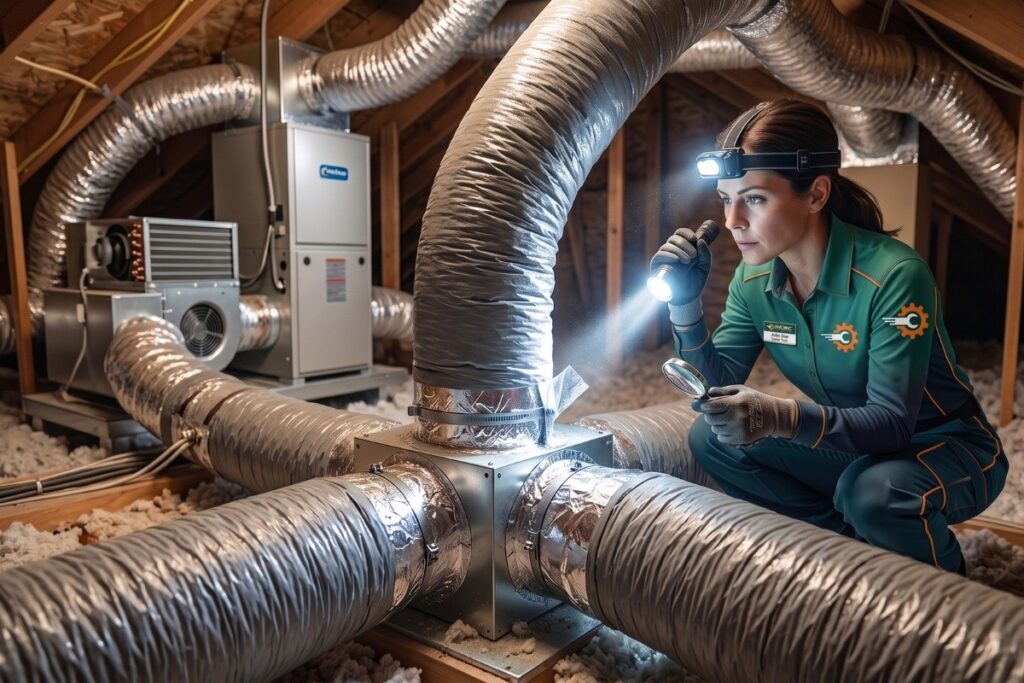
Yes, ductwork can make a new AC loud. Small ducts, loose ducts, leaky joints, sharp turns, crushed flex duct, and poor return design can create rushing air, popping, whistling, vibration, and uneven room comfort. The AC may be new, but the duct system may be outdated.
Ductwork is one of the biggest missed problems in noisy AC complaints.
The new system may need more airflow than the old ducts can carry. When air moves through tight spaces, it gets louder. You may hear vents roar like a fan on high speed.
ACCA Manual D is the residential duct design standard used for sizing duct systems. The Building America Solution Center also notes that new ducts should be sized according to ACCA Manual D.
Here is a simple comparison.
Noise | Likely Duct Issue | What It Means |
Whistling | Small opening or leak | Air is escaping under pressure |
Roaring airflow | Ducts too small | Air volume is too high for duct size |
Popping | Metal duct expansion | Pressure or temperature change |
Rattling | Loose duct or grille | Vibration needs correction |
Uneven room noise | Poor duct balance | Some rooms get too much airflow |
Loud return | Return duct too small | System is pulling air too hard |
Ductwork Repair in Abilene
Why Does My AC Sound Like a Jet Engine Inside?
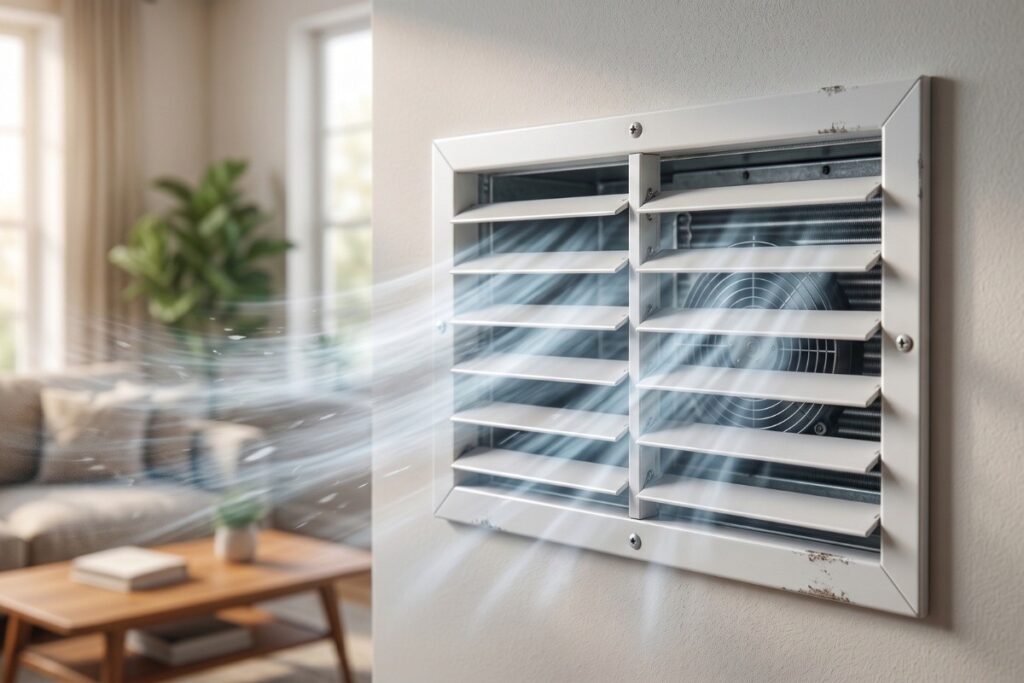
An AC often sounds like a jet engine when airflow is too strong for the duct system. High blower speed, oversized equipment, blocked vents, dirty filters, or undersized return air can force air through the system too aggressively and make indoor vents sound loud.
This sound usually comes from air pressure, not a failing compressor.
Start with safe checks. Make sure the filter is clean. Open all supply vents. Move furniture away from registers. Check that return grilles are not blocked.
Do not close vents to make the system quieter. That often increases pressure. It can make the sound worse.
If the sound continues, ask for a static pressure test. A technician may use a manometer from brands like Fieldpiece or Testo. These tools help measure pressure inside the duct system.
A smart thermostat such as Ecobee or Honeywell Home may show runtime patterns. It will not diagnose duct pressure by itself. Still, it can help show short cycling or long run times.
What Different AC Noises Mean
Different AC noises point to different problems. Rattling often means loose parts. Buzzing may point to electrical trouble. Hissing can suggest refrigerant issues. Grinding or squealing may involve a motor, bearing, belt, or blower wheel. Loud airflow usually points to pressure.
Rattling Noise
Rattling often comes from loose screws, panels, duct joints, or fan parts. It can also come from debris near the blower or condenser.
Do not ignore rattling if it gets louder each cycle.
Buzzing Noise
Buzzing can come from a contactor, capacitor, relay, loose wiring, or failing motor. This is not a sound to troubleshoot deeply yourself.
Turn the system off if the buzzing is loud or paired with a burning smell.
Hissing Noise
Hissing may come from air leaks, refrigerant issues, or pressure changes. A soft air leak near ductwork is different from a sharp refrigerant hiss.
Refrigerant work needs a licensed technician.
Banging Noise
Banging can mean loose parts, duct popping, compressor problems, or sudden pressure changes. If it sounds like metal hitting metal, stop running the unit.
Whistling Noise
Whistling usually means restriction. The cause may be a dirty filter, closed vent, blocked return, or leaky duct seam.
Grinding or Squealing Noise
Grinding or squealing often points to a blower motor, bearing, belt, or wheel problem. This can get expensive if ignored.
How to Reduce AC Noise Safely at Home
You can safely reduce some AC noise by changing the filter, opening vents, clearing registers, checking return grilles, and listening for the noise source. Avoid electrical parts, refrigerant lines, internal motor parts, and sealed panels unless you are trained.
Follow this simple process.
First, turn the system off before checking the filter. Replace a dirty filter with the correct size and rating. ENERGY STAR says dirty, clogged filters reduce airflow and system efficiency.
Second, open supply vents. Do not block returns with furniture, rugs, curtains, or storage boxes.
Third, listen from room to room. Is the sound at one vent, every vent, the return grille, the air handler, or outside condenser?
Fourth, write down the noise type. Rattling, buzzing, hissing, and grinding mean different things.
Fifth, call a technician if the sound continues.
Aprilaire filters can improve filtration when the system is designed for them. But a high MERV filter in the wrong setup can restrict airflow. That can increase noise. This is why filter upgrades should match the system.
What Not to Do When Your New AC Is Loud
Do not ignore dangerous sounds, close vents to quiet airflow, open electrical panels, add random insulation near equipment, or assume a new unit cannot have installation problems. New systems can still be sized wrong, installed poorly, or connected to ductwork that cannot handle airflow.
Avoid these mistakes:
Do not keep running the AC if you hear grinding.
Do not ignore buzzing near electrical parts.
Do not block the return grille.
Do not tape ducts without knowing the leak source.
Do not blame the brand before checking installation.
Do not accept vague answers if the noise started after install.
A strong opinion here is simple. The quietest AC brand cannot overcome bad duct design.
Carrier, Trane, Lennox, Goodman, Rheem, American Standard, and York all make systems that can run well. But every brand depends on sizing, ductwork, and setup.
The best system is the one installed correctly for your home.
When Should You Call the Installer or HVAC Technician?
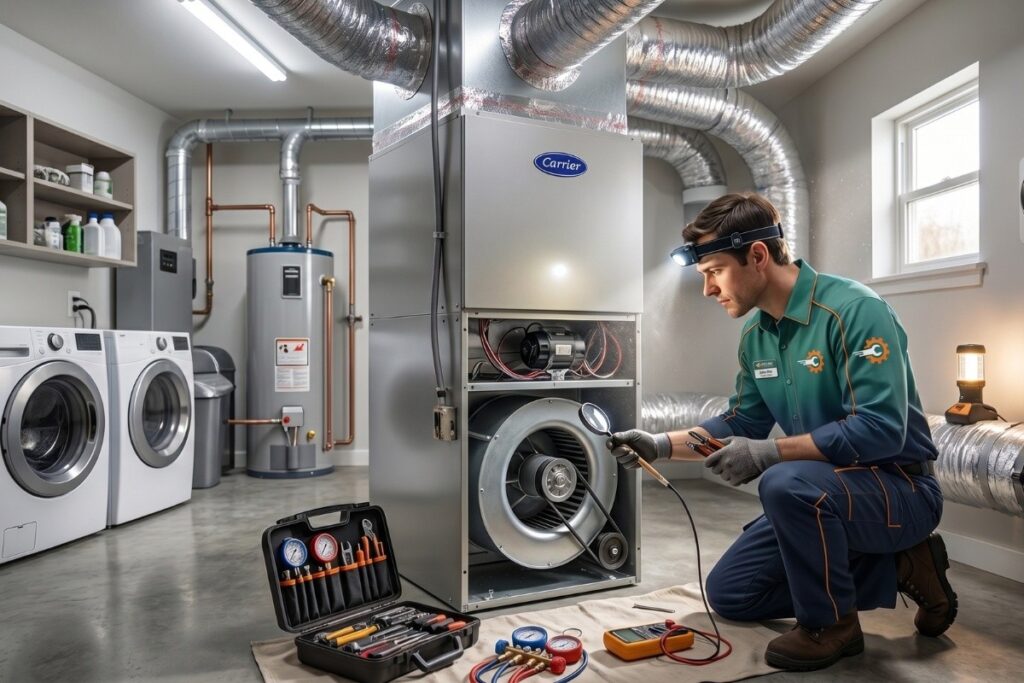
Call a technician when the AC noise is loud, sudden, sharp, electrical, metallic, or worse than it was after installation. You should also call if the system short cycles, cools unevenly, vibrates, smells hot, or makes the same noise during every cycle.
Call the original installer first if the system is new. Labor coverage may still apply.
Ask clear questions:
Did you run a Manual J load calculation?
Did you check static pressure?
Did you inspect return air size?
Did you adjust blower speed?
Did you test duct leakage?
Did you verify refrigerant charge?
Get a second opinion if the answer is vague.
One example is a homeowner who hears loud airflow after a replacement. The installer says it is normal. A second technician checks static pressure and finds restricted return air. After adding return capacity, the system sounds calmer and rooms cool better.
That is not magic. It is airflow correction.
Why AC Noise Should Not Be Ignored in Abilene Homes
In Abilene, AC systems work hard during hot months. A loud new AC can affect sleep, comfort, energy use, and equipment life. Noise may also reveal airflow restriction, duct pressure, poor installation, or early part failure before the system breaks down.
Abilene’s hot season lasts from late May to mid September, with average daily highs above 88°F. July averages around 95°F.
That means your AC is not a small comfort item. It is one of the most important systems in the home.
A loud unit may still cool today. But if the noise comes from pressure, vibration, or electrical trouble, waiting can make repair costs higher.
For local homes, I would prioritize noise complaints in this order:
Buzzing or burning smell
Grinding or metal scraping
Hissing near refrigerant lines
Banging from the unit
Jet engine airflow
Loud return suction
Rattling panels
The first four need faster attention. The last three still matter because they affect comfort and system strain.
Final Thoughts: A Loud New AC Usually Means Airflow, Ductwork, or Installation Needs Attention
If you are asking “why is my new AC so loud inside my house?”, the likely answer is airflow, ductwork, blower speed, installation, sizing, vibration, or a mechanical issue.
Start with safe checks. Replace the filter, open vents, clear returns, and note the sound. Then call the installer or a local HVAC technician if the noise continues.
My practical prediction is this. Many noisy new AC complaints will keep increasing as homeowners replace old systems but leave old ductwork untouched. The equipment gets upgraded, but the airflow path does not.
If your new AC sounds too loud, do not wait for it to “break in.” Ask for a real airflow and duct inspection.